To provide high-quality medical education based on scientific knowledge, international experience and modern teaching approaches, preparing students for responsible and competent medical practice.
To strengthen David Tvildiani Medical University as a trusted medical institution focused on continuous academic development, quality education, research and international cooperation.
Education at David Tvildiani Medical University combines scientific knowledge, clinical learning, research and international medical education to develop competent, ethical and globally oriented medical professionals.
Year
AIETI Medical School was established by Academician David Tvildiani and Dr. Dimitri Tvildiani as one of Georgia's first non-governmental higher medical education institutions.
Year
AIETI Medical School gained international recognition and was listed in the World Directory of Medical Schools, marking an important step in its international development.
Year
After expanding its residency, PhD and doctoral programmes, the institution received university status and was renamed David Tvildiani Medical University.
Year
DTMU's Medical Doctor ePBL programme received accreditation, strengthening the university's problem-based and competency-oriented approach to medical education.
Year
David Tvildiani Medical University officially opened its Rustavi Campus, expanding its academic facilities and learning environment for students.
Year
DTMU celebrated its 20th Graduation Ceremony in Tbilisi, bringing together graduates from 1997–2017 and marking two decades of graduating medical professionals.
Year
David Tvildiani Medical University marked its 30th anniversary, celebrating three decades of medical education, graduates and academic development in Georgia.
Year
DTMU joined the Practicum Universities pilot project, introducing the Practicum Script simulator to strengthen clinical reasoning among senior medical students.
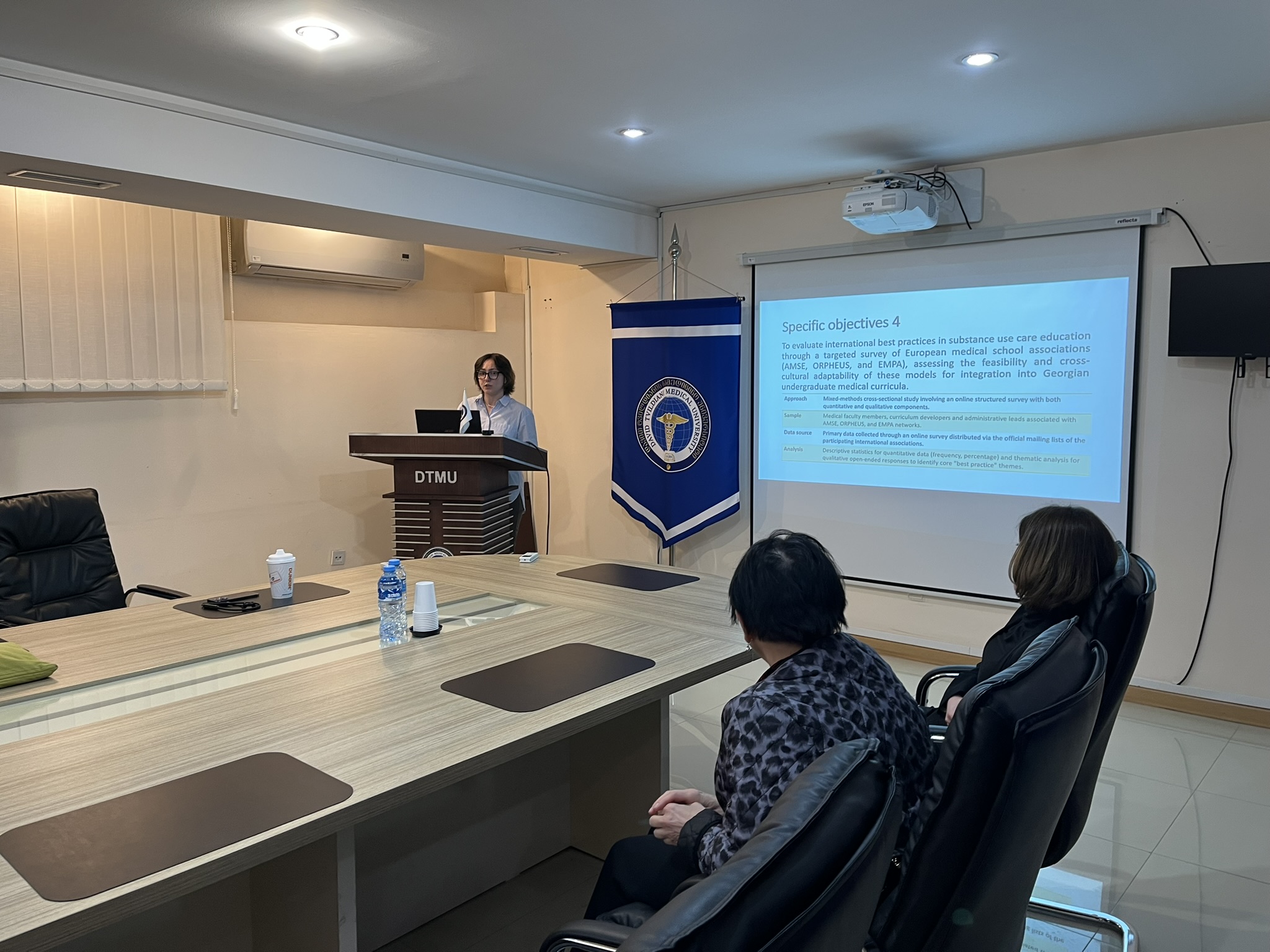
David Tvildiani Medical University (DTMU) is a medical higher education institution in Georgia whose history originates from AIETI Medical School. The university's educational approach is centred on science-based medical education, international experience and continuous development in teaching and research.
DTMU delivers Medical Doctor programmes in Georgian and English, including its MD ePBL programme, together with doctoral education. Its medical curriculum combines basic and clinical sciences, problem-based learning, clinical skills and research-oriented education to prepare students for professional medical practice.
The university also promotes international cooperation, student development and participation in academic and research activities, with partnerships and professional links extending beyond Georgia.
932+
University Graduates
800+
Georgian & International Students
300+
Academic & Support Staff
7
Academic Departments
DTMU's medical education combines scientific knowledge, integrated teaching, clinical skills and modern educational methods to help students develop the competencies required for medical practice.
The MD curriculum integrates medical subjects around organ systems, connecting basic sciences with clinical knowledge and helping students understand medicine in a structured and practical context.
DTMU's ePBL approach uses patient cases, clinical scenarios, small-group learning and virtual-patient activities to develop clinical reasoning, decision-making and problem-solving skills.
Students develop practical and scientific competencies through clinical-skills training, simulated learning, real clinical environments and research-oriented educational activities.
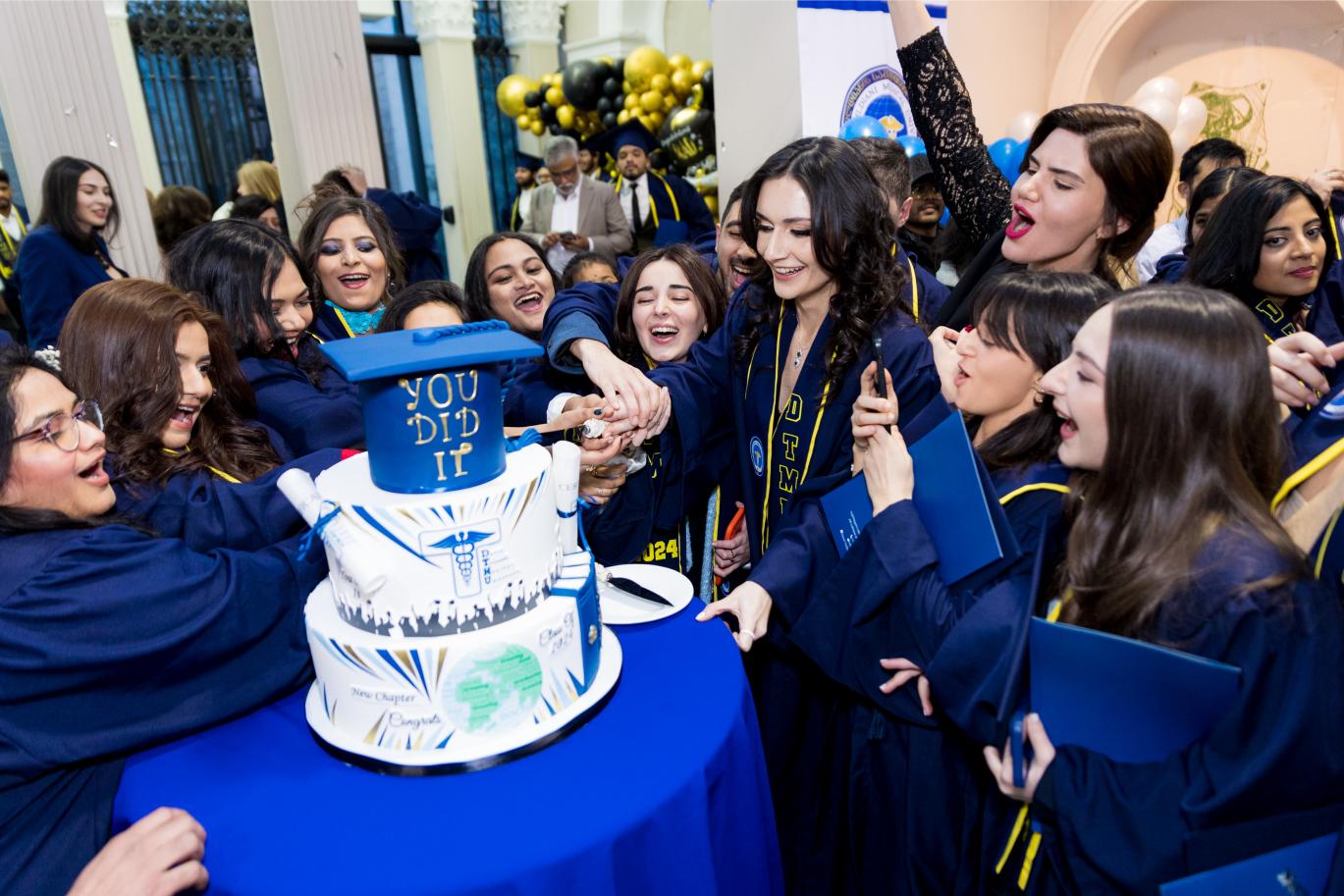
Student life at DTMU extends beyond lectures through university traditions, educational and cultural activities, sports, student clubs and opportunities for Georgian and international students to interact.
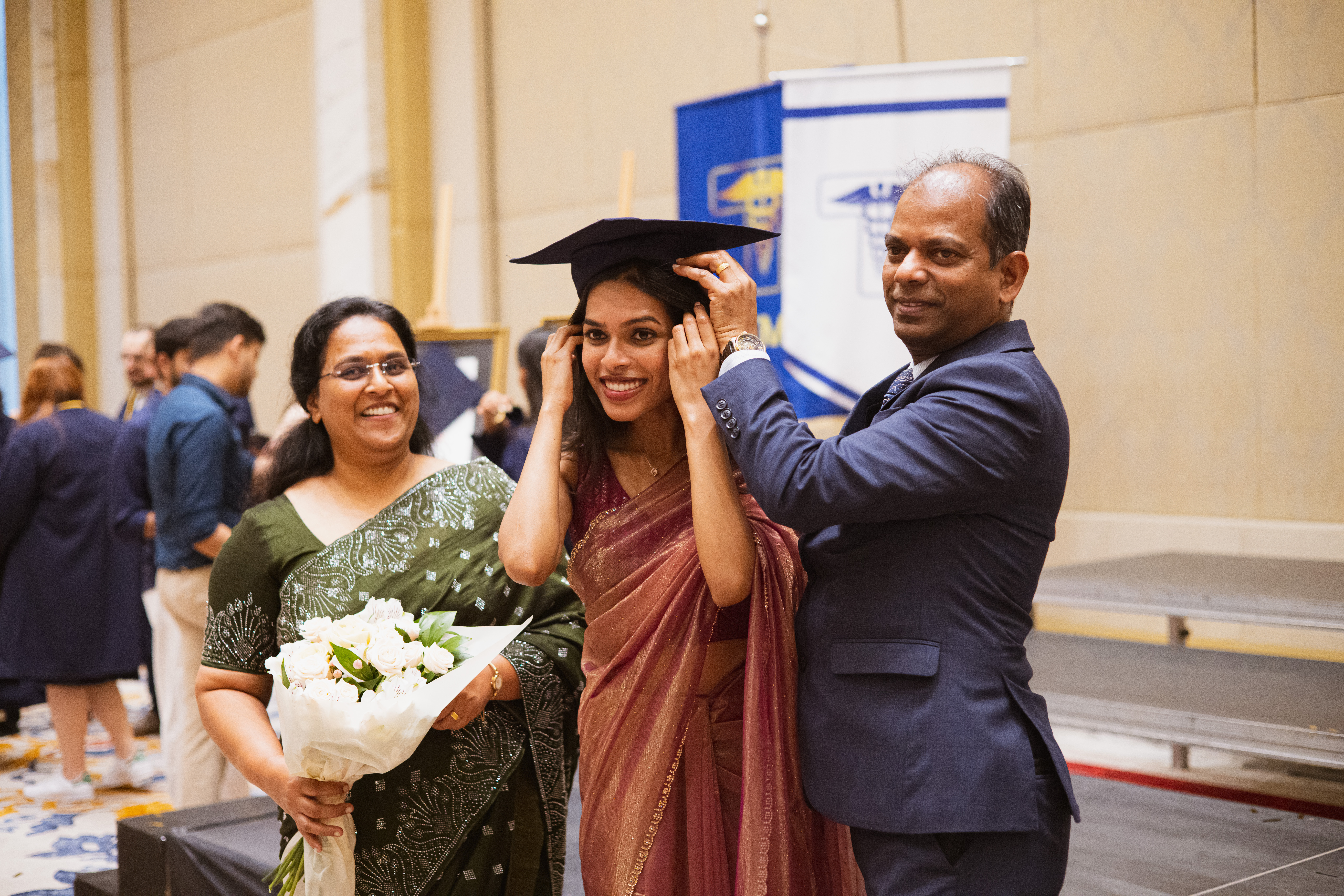
DTMU's Rustavi university campus provides classrooms, a library, residential facilities, a cafeteria, exercise areas and recreational spaces designed to create a comfortable environment for students.
University traditions include the White Coat Ceremony, marking the transition of third-year students toward the clinical stage of their education, along with an annual Freshmen Party organised within the student community.
International students study Georgian language from their first semester and participate in activities designed to introduce Georgian history, traditions and culture while encouraging interaction between Georgian and international students.
DTMU connects medical education with professional development by helping students understand their interests, build practical competencies and prepare for future employment and career growth.
Clinical and communication skills are developed progressively through simulated training, patient-based learning and experience in real clinical environments.
The university's Career Development activities focus on identifying students' abilities, interests and professional goals while supporting appropriate employment and long-term career development.
DTMU maintains international academic relationships and participates in European and international medical-education networks, supporting an internationally oriented environment for students and academic staff.
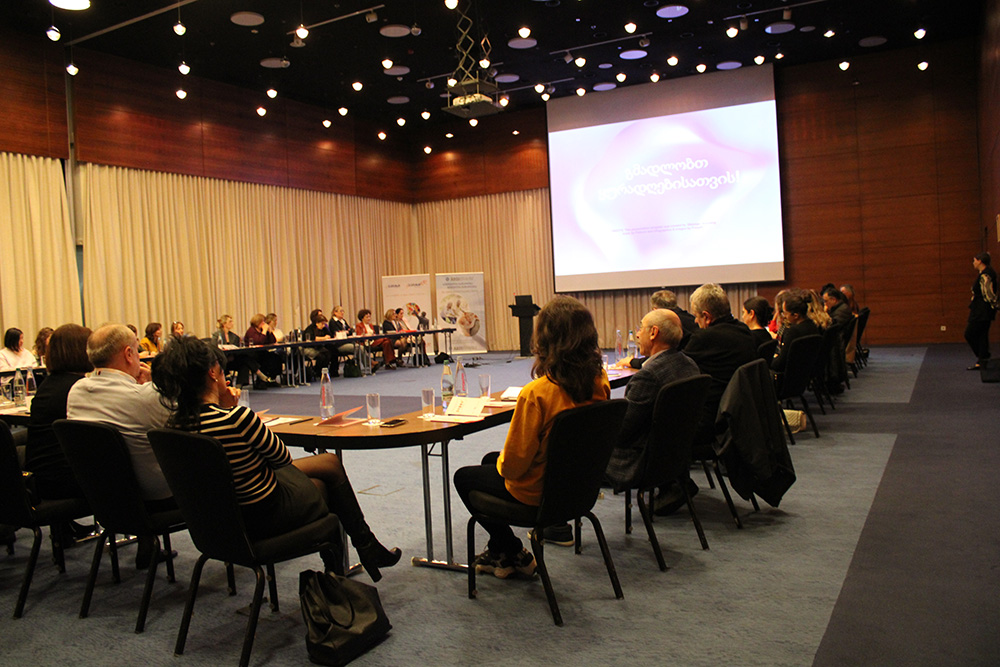
David Tvildiani Medical University is a medical higher education institution in Tbilisi, Georgia, providing science-based medical education informed by international experience, modern teaching methods and research.
© Copyright by David Tvildaini Medical University